Let's Meet | 2026中国—东盟周来了!看重庆与东盟的新故事

China-ASEAN Week 2026 Is Coming: New Stories of Chongqing-ASEAN Cooperation|Let’s Meet
11月16日,重庆市政府新闻办举行2026中国—东盟周新闻发布会。记者从会上获悉,2026中国—东盟周将于11月23日在重庆开幕,以“深化战略合作 联通共享繁荣”为主题,安排政务活动、通道经济、科技创新、人文交流、新闻发布、参访感知等六大类30场活动,聚焦经贸投资、通道物流、科技创新、文化旅游四个务实合作方向。其中,经贸洽谈会和消费品博览会将同期举行,算力合作也将成为关注重点。
A press conference for ASEAN-China Week 2026 was held in Chongqing on Nov. 16. The event will open on Nov. 23 under the theme "Deepening Strategic Cooperation, Connecting for Shared Prosperity." A total of 30 activities across six categories are planned, covering government engagement, corridor economy, technological innovation, cultural exchange, press events, and visits to local businesses and facilities. The program will focus on four areas of practical cooperation: trade and investment, logistics connectivity, tech innovation, and culture and tourism. A economic and trade cooperation matchmaking conference and a consumer exports expo will also take place during the week, while cooperation in computing power is expected to draw attention.
ASEAN introductory graphic. (Image from the program)
中国与东盟的交往由来已久。早在唐代,中国商人便前往东南亚经商;明代郑和船队多次远航东南亚,促进了双方人员往来和文化交流。1967年东盟成立后,中国与东南亚国家的区域合作逐步走向机制化。2026年是中国与东盟建立对话关系35周年,也是中国—东盟建立全面战略伙伴关系5周年。经过多年发展,双方合作已从传统贸易拓展至产业、物流、科技、教育和旅游等多个领域。
China and Southeast Asian countries have a long history of exchanges. Chinese merchants were already traveling to the region for trade during the Tang Dynasty (618-907). During the Ming Dynasty (1368-1644), the voyages led by Zheng He further promoted trade, migration and cultural exchanges. Since ASEAN was established in 1967, regional cooperation has become increasingly institutionalized. The year 2026 marks the 35th anniversary of China-ASEAN Dialogue Relations and the fifth anniversary of the establishment of the China-ASEAN Comprehensive Strategic Partnership. Cooperation has since expanded beyond traditional trade to cover industry, logistics, technology, education and tourism.
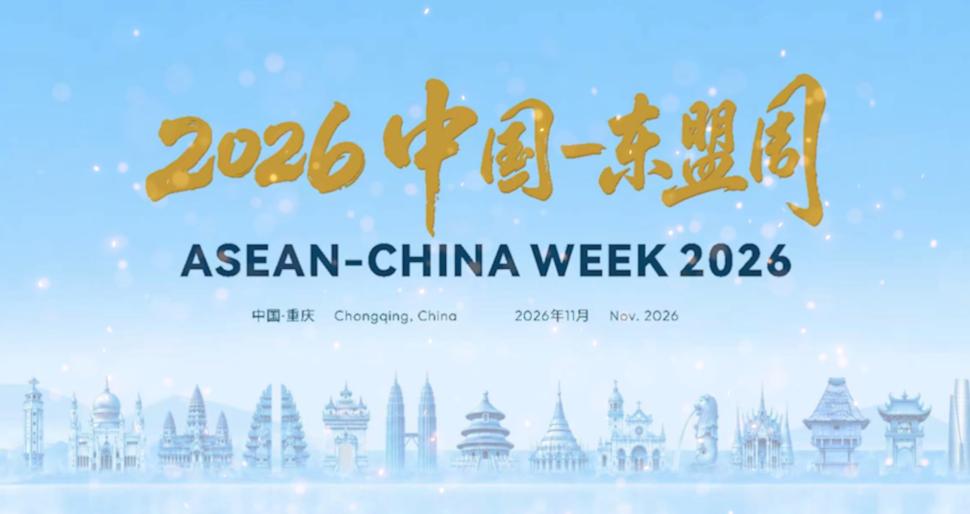
2026 ASEAN-China Week poster. (Image from the program)
2025年,重庆对东盟进出口1326.5亿元,同比增长12.6%,东盟继续保持重庆第一大贸易伙伴地位。作为中国西部重要的开放门户,重庆如何进一步连接东盟市场,拓展产业合作和人文交流?从重庆的一些具体实践中,可以看到内陆城市与东盟合作的不同路径。
In 2025, Chongqing's imports and exports with ASEAN reached 132.65 billion yuan, up 12.6% year on year, making ASEAN the municipality's largest trading partner. As a major gateway for China's opening-up in the west, Chongqing is exploring ways to strengthen its links with ASEAN markets through industrial cooperation and people-to-people exchanges. Several local initiatives offer a glimpse into how these ties are developing.
一杯珍珠奶茶背后的跨境供应链
A Cross-Border Supply Chain Behind a Cup of Bubble Tea
珍珠奶茶是不少年轻人喜爱的饮品,但很少有人知道,口感Q弹的珍珠,其主要原料之一是木薯淀粉。2025年,重庆一处集散中心完成木薯粉贸易约13万吨。按照每杯珍珠奶茶使用30克木薯淀粉计算,这些原料理论上可制作约43亿杯珍珠奶茶。来自东南亚的木薯粉如何运抵重庆?这笔跨境生意的背后,是位于重庆国际铁路港综合保税区内的东盟木薯粉西南集散中心。
Bubble tea is a popular drink among young people, but few may know that cassava starch is a key ingredient in many tapioca pearls. In 2025, a distribution center in Chongqing handled around 130,000 tonnes of cassava starch trade. Based on an assumed 30 grams of starch per serving, that volume could theoretically make about 4.3 billion cups of bubble tea. How does cassava starch from Southeast Asia reach Chongqing? Behind the trade is the ASEAN Southwest Cassava Starch Distribution Center, located in the Chongqing International Railway Port Comprehensive Bonded Zone.
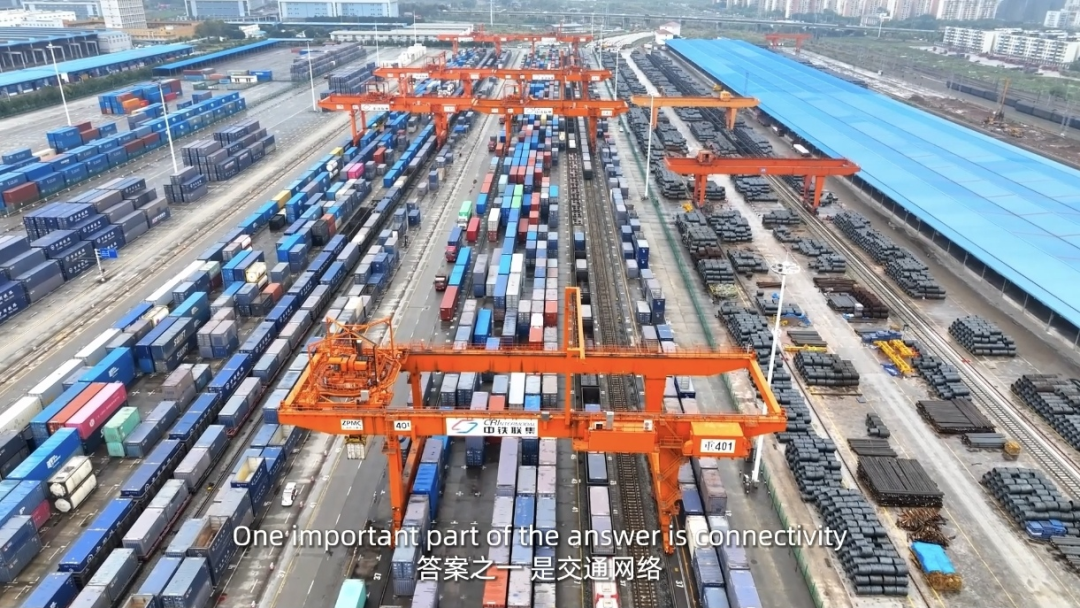
Aerial view of railway port. (Image from the program)
2024年4月30日,重庆国际铁路港综合保税区获国务院批复设立。2025年4月16日,东盟木薯粉西南集散中心正式揭牌。同一天,首批来自老挝的1060吨木薯粉搭乘西部陆海新通道中老班列抵达重庆团结村集装箱中心站,经转运和海关查验后进入综保区食品仓库。
The Chongqing International Railway Port Comprehensive Bonded Zone was approved by the State Council on April 30, 2024. On April 16, 2025, the ASEAN Southwest Cassava Starch Distribution Center was officially inaugurated. That same day, the first shipment of 1,060 tons of cassava starch from Laos arrived in Chongqing by freight train via the China-Laos Railway, a key link in the New International Land-Sea Trade Corridor. The cargo was then transferred and cleared through customs before entering the food warehouse in the bonded zone.
2025年,该中心完成木薯粉贸易约13万吨,货值超过4亿元。木薯粉的用途并不局限于珍珠奶茶,还广泛应用于酸辣粉、芋圆、方便面、粉条等食品加工,以及造纸等工业生产。
In 2025, the center handled around 130,000 tonnes of cassava starch trade, valued at more than 400 million yuan. Beyond bubble tea pearls, cassava starch is used in a range of products, including hot and sour noodles, taro balls, instant noodles and vermicelli, as well as in industrial applications such as papermaking.
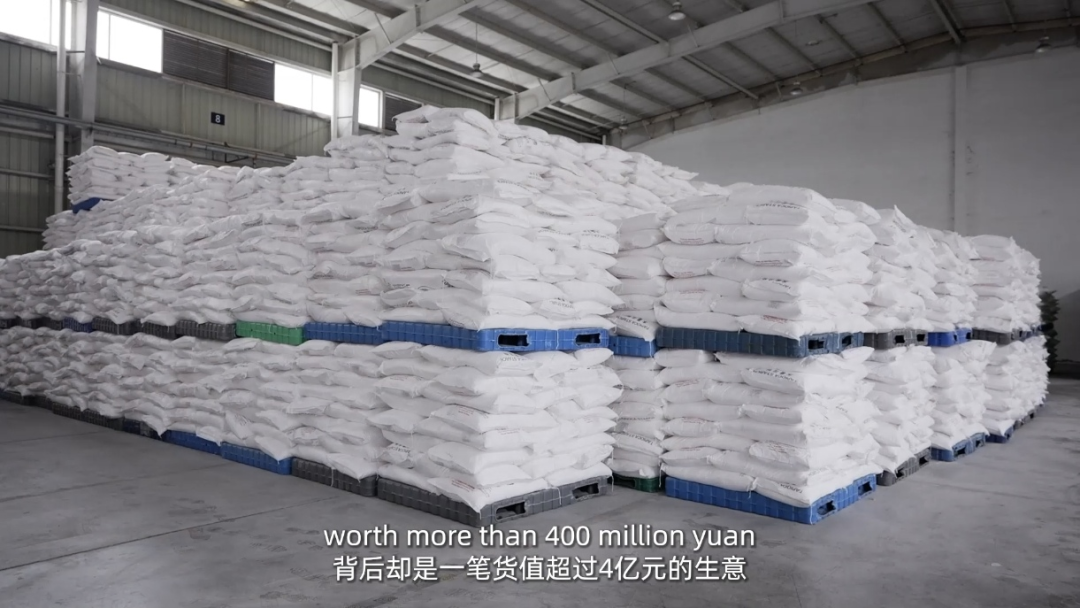
Bags of cassava starch stacked inside a warehouse. (Image from the program)
重庆既不沿海,也不与东南亚国家接壤,为什么能够承接来自东盟的大宗农产品贸易?
Chongqing is neither a coastal city nor directly connected by land to Southeast Asia. How, then, has it become a distribution point for agricultural products from ASEAN?
重庆国际物流枢纽园区工作人员、东盟木薯粉西南集散中心筹建者王慈航介绍,沙坪坝是西部陆海新通道和中欧班列的交汇节点,南向连接东盟木薯主产区,多式联运体系较为成熟。
Wang Cihang, a staff member at the Chongqing International Logistics Hub Park and one of the initiators of the ASEAN Southwest Cassava Starch Distribution Center, said Shapingba District sits at the intersection of the New International Land-Sea Trade Corridor and the China-Europe Railway Express. Its transport links extend southward to major cassava-producing areas in ASEAN, supported by an established multimodal transport network.
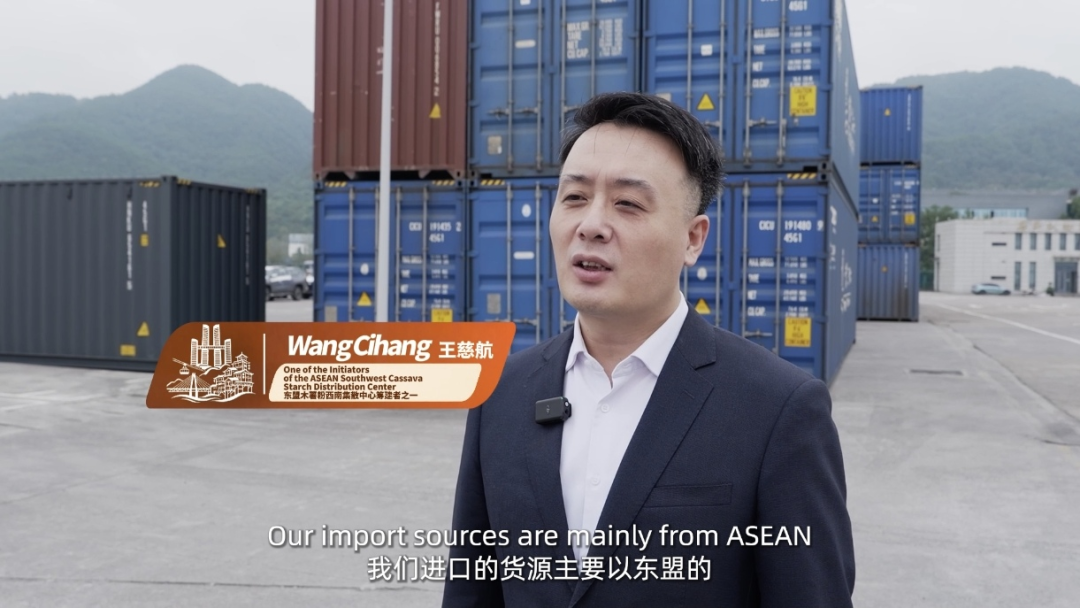
Wang Cihang in an interview. (Image from the program)
“在这里建集散中心,就是把原料放在离下游客户最近的枢纽,压缩供应链周期、降低综合成本。”王慈航说,依托口岸查验配套能力,可以实现大宗木薯淀粉常态化、稳定进口。
"Setting up a distribution center here means placing raw materials at a logistics hub close to downstream customers, shortening supply chain cycles and reducing overall costs," Wang said. Supporting customs inspection facilities also help ensure regular and stable imports of bulk cassava starch.
目前,集散中心的木薯粉货源主要来自老挝、越南和柬埔寨。以老挝货源为例,货物通常从万象南站起运,经过双边通关和铁路运输后抵达重庆,全程约需5至7天。
The center's cassava starch is mainly sourced from Laos, Vietnam and Cambodia. Shipments from Laos typically depart from Vientiane South Station and travel to Chongqing by rail after customs clearance on both sides of the border. The journey usually takes around five to seven days.
货物抵达重庆后,如何进一步进入下游市场,同样关系到这笔生意能否持续扩大。
Getting the goods to Chongqing is only part of the process. Connecting them with downstream industries and markets is equally important to the expansion of the business.
东盟木薯淀粉经销商、新西部(重庆)农产品有限公司销售总经理邓琰韦介绍,公司预计2026年至2027年木薯粉进口量将达到15万至20万吨左右。
Deng Yanwei, general manager of sales at New West (Chongqing) Agricultural Products Co., Ltd., an ASEAN cassava starch distributor, expects the company's imports to reach around 150,000 to 200,000 tons in 2026 and 2027.
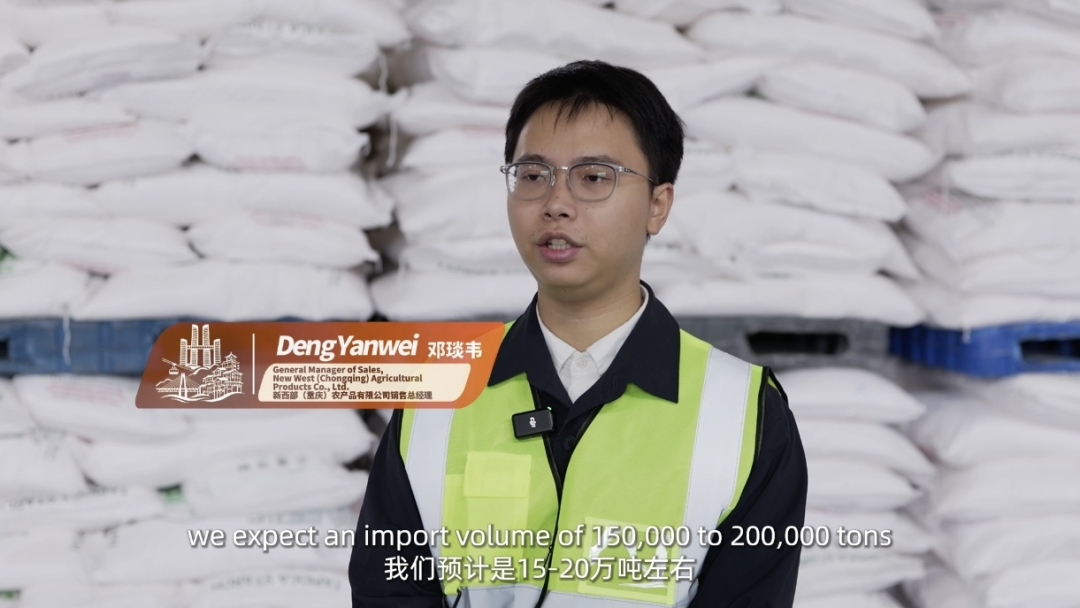
Deng Yanwei in an interview. (Image from the program)
“我们主要服务西南片区的食品厂、改性淀粉厂、纸厂,还有一些饲料厂。”邓琰韦说,木薯粉还用于火腿肠、方便面、粉条等食品加工,以及包装纸、牛津纸和胶水等相关生产。目前,公司的销售市场主要覆盖四川、重庆、湖北、湖南和河南。
"Our main customers are food manufacturers, modified starch producers, paper mills and feed manufacturers in southwest China," Deng said. Cassava starch is also used in the production of ham sausages, instant noodles and vermicelli, as well as in related industries making packaging paper, Oxford paper and adhesives. The company's sales network currently covers Sichuan, Chongqing, Hubei, Hunan and Henan.
从东南亚采购原料,通过中老铁路运抵重庆,再销往中国西部多个省份,木薯粉贸易呈现出较为清晰的供应链路径。
The trade follows a clear supply chain: raw materials are sourced from Southeast Asia, transported to Chongqing via the China-Laos Railway, and then distributed to markets across several provinces in western China.
对于重庆而言,集散中心的意义不只是增加一种进口商品。依托铁路口岸和综合保税区,重庆能够为企业提供货物集散、通关和物流服务,将海外货源与国内下游市场连接起来。随着贸易规模扩大,物流通道与本地贸易企业、加工企业之间的联系也更加紧密。
For Chongqing, the distribution center represents more than an additional imported commodity. With the support of railway port facilities and the comprehensive bonded zone, the city can provide services for cargo distribution, customs clearance and logistics, linking overseas suppliers with downstream businesses in China. As trade expands, transport infrastructure is becoming more closely connected with local trading and processing companies.
一位泰国青年的中国朋友圈
A Thai Young Man's Circle of Friends in China
在重庆的一家餐厅,来自泰国的韩冰正用中文向店员点餐,随后又用泰语向朋友介绍菜品。坐在他身边的,是专程来到重庆拍摄的泰国双胞胎美食博主Pun和Pong。两人共同运营美食账号TheFadd,在社交媒体上拥有500多万粉丝。这次,韩冰既是朋友,也是向导,帮助他们更好地了解重庆。
At a restaurant in Chongqing, Han Bing, a Thai national, speaks Chinese with the staff before switching to Thai to explain the dishes to his friends. Sitting beside him are Pun and Pong, Thai twin food bloggers who have come to Chongqing to film content. The brothers jointly run the food channel TheFadd, which has more than five million followers on social media. During their visit, Han Bing serves as both a friend and a local guide, helping them get to know the city.
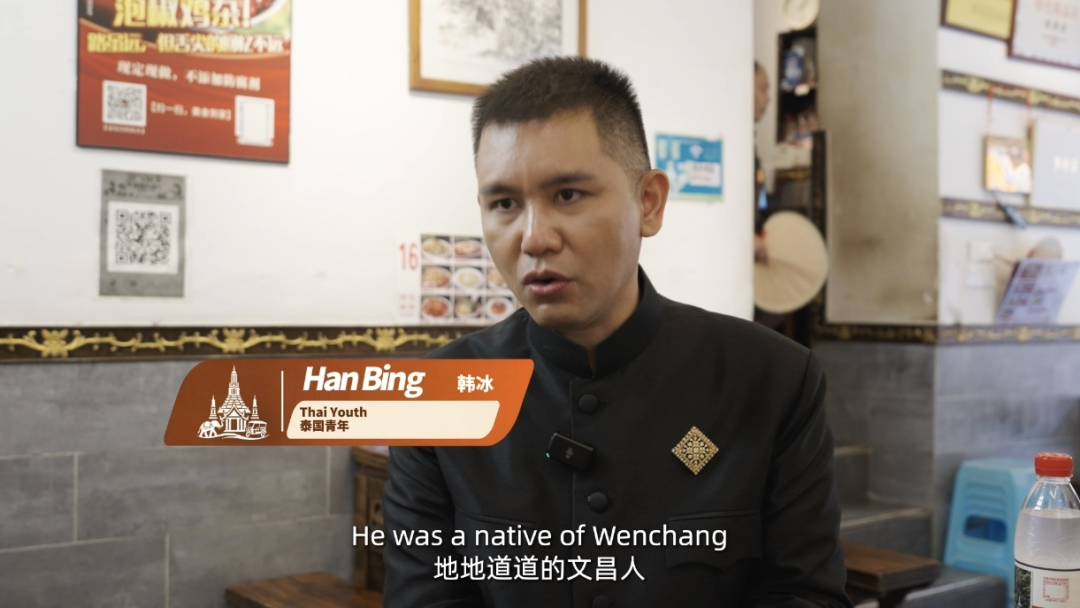
Han Bing in an interview. (Image from the program)
韩冰与中国的缘分,始于对家族根源的探寻。他的外公来自海南文昌,后来移居泰国。最初学习中文,是希望更多地了解自己的家族。“如果我学中文,就能了解更多自己的根。”大学期间,他接触的还是基础汉语。后来在南京大学读研究生时,一次节目邀约让他走进媒体行业。此后,他有机会参与不同城市的节目拍摄,并与中国团队合作。工作中,他逐渐感受到中文的实际价值:“如果中文不好,沟通中可能会产生一些误会。”能够直接听懂导演的要求,也让工作配合更加顺畅。
Han Bing's connection with China began with a desire to learn more about his family roots. His grandfather was from Wenchang, Hainan Province, before moving to Thailand. Learning Chinese initially offered him a way to understand that part of his family history. "If I learn Chinese, I can learn more about my roots," Han said. He studied basic Chinese at university. Later, while pursuing postgraduate studies at Nanjing University, an invitation to appear on a television program unexpectedly led him into the media industry. He went on to take part in productions in different Chinese cities and work with local production teams. Through these experiences, he came to appreciate the practical value of the language. "If your Chinese isn't good, there can be misunderstandings in communication," he said. Being able to understand a director's instructions directly also makes it easier to work with the production team.

Han Bing with Thai bloggers Pun and Pong. (Image from the program)
为了更好地在重庆接待Pun和Pong,韩冰请来了自己在重庆的好朋友张楠。张楠是重庆电视台的一名主持人,两人的相识始于2017年。当时,他们在爱奇艺的一档主持类综艺节目中结识,张楠是参赛选手,韩冰担任评委。
To help Pun and Pong make the most of their visit, Han invited his longtime Chongqing friend Zhang Nan to join them. Zhang is a host at CQTV. The two first met in 2017 on a hosting competition show produced by a Chinese video platform, where Zhang was a contestant and Han served as a judge.
多年后,两人重新建立合作关系,将各自的专业优势运用到中泰文化交流和商业合作中。他们参与策划少儿综艺节目,让中国孩子了解泰国文化,也帮助重庆汽车企业在泰国开展推介活动。韩冰主要负责项目整体规划,张楠则发挥电视节目策划和制作方面的经验。谈到合作,张楠说,两人将各自的专长融合在一起,配合得比较默契。在韩冰看来,合作不仅是项目对接,更重要的是相互了解文化背景,把泰国文化介绍给中国朋友,也把中国文化、尤其是重庆文化介绍给泰方。
Years later, they reconnected professionally, bringing their respective expertise to cultural and business exchanges between China and Thailand. Their projects have included children's variety programs introducing Chinese children to Thai culture, as well as promotional activities in Thailand for automakers from Chongqing. Han is mainly responsible for overall project planning, while Zhang draws on his experience in television program planning and production. Zhang said their different professional strengths complement each other and make their cooperation work well. For Han, however, successful cooperation involves more than coordinating projects. It also requires an understanding of each other's cultural backgrounds. The aim, he said, is to introduce Thai culture to Chinese audiences while also sharing Chinese culture, particularly Chongqing's local culture, with Thai partners.

Han Bing with Zhang Nan. (Image from the program)
中文带来的机会也延伸到了商业领域。最近,韩冰有一位泰国客户希望与中国团队开展人工智能短剧合作,他计划就此进行沟通,同时也关注中泰旅游合作。在他看来,语言能力直接影响商务沟通的效果:“跟中国人谈生意,如果不懂中文,说不出口怎么谈?”他还注意到,在泰国学习中文的人越来越多,自己的侄子最近刚刚通过汉语水平考试三级。
The opportunities created by learning Chinese have also extended into business. Han recently had a Thai client interested in working with a Chinese team on AI-generated short dramas, and he plans to discuss potential cooperation. He is also interested in tourism exchanges between China and Thailand.
For Han, language skills are essential to business communication. "If you don't understand Chinese, how can you do business with Chinese partners? How can you explain whether a product is good or bad, or recommend one option over another?" he said. He has also noticed that more people in Thailand are learning Chinese. His nephew, who lives in northeastern Thailand, recently passed Level 3 of the HSK, China's standardized Chinese proficiency test for non-native speakers.
这次来到重庆,韩冰还带着Pun和Pong游览磁器口、品尝重庆美食,让两位泰国朋友通过实地体验了解这座城市。谈及未来,他希望自己能够成为连接中泰两国的文化桥梁。
During this visit, Han also took Pun and Pong to Ciqikou to explore the historic neighborhood and sample local food, giving the two Thai visitors a closer look at everyday life in Chongqing. Looking ahead, Han hopes to become a cultural bridge between China and Thailand.
让更多合作在重庆展开
Creating More Opportunities for Cooperation in Chongqing
一处木薯粉集散中心,连接着东南亚农产品供应商与中国西部加工企业;一位泰国青年的经历,则展现了中文学习如何延伸至媒体、旅游和商业合作。这些具体的经贸往来和人员交流,也让重庆与东盟的合作有了更多现实落点。
A cassava starch distribution center connects agricultural suppliers in Southeast Asia with processing businesses in western China. Han Bing's experience, meanwhile, shows how language learning can lead to opportunities in media, tourism and business cooperation. Together, these examples illustrate the different ways Chongqing's ties with ASEAN are developing.
中国—东盟周由中国—东盟中心于2023年创办,已成功举办三届,是中国与东盟国家开展交流合作的重要平台。
ASEAN-China Week was launched by the ASEAN-China Center in 2023 and has been held three times. It serves as a platform for exchanges and cooperation between China and ASEAN countries.
对于重庆而言,如何进一步发挥铁路通道、口岸平台和产业基础优势,推动更多东盟商品进入中国市场,同时帮助本地企业拓展东盟市场,是双方经贸合作持续深化的重要方向。与此同时,教育、文化、旅游等领域的人员往来,也为企业合作和市场对接创造了更多条件。
For Chongqing, a key task is to make better use of its railway connections, port facilities and industrial base to bring more ASEAN products into the Chinese market while helping local businesses expand into Southeast Asia. Exchanges in education, culture and tourism can also create opportunities for closer business ties and market connections.
随着2026中国—东盟周临近,重庆与东盟的企业、机构和各界人士将迎来更多交流对接的机会。如何把通道优势转化为产业合作,把交流成果落实到具体项目,将成为双方进一步深化合作的重要方向。
As ASEAN-China Week 2026 approaches, businesses, institutions and representatives from Chongqing and ASEAN countries will have more opportunities to connect and explore cooperation. Turning transport connectivity into industrial partnerships and translating exchanges into concrete projects will be important to deepening ties in the years ahead.
编辑 :刘珅园
责编 :陈俊男
监制 :尹燕 徐涛
商务合作:马圣洋(18908316215)
本文来自大风号,仅代表大风号自媒体观点。
